Understanding Advaita Vedanta
What Defines Advaita Vedanta?
Advaita Vedanta originated in ancient India and centers on direct inquiry into the nature of the self. Its primary practice is asking questions like “Who am I?”—not as philosophical puzzles, but as a way of turning attention toward what is aware of experience.
Rather than trying to improve the mind or reach special states, Advaita invites you to examine whether a separate, independent self can actually be found. When looked at closely, what we tend to experience as a fixed feeling of “I” can be seen instead as a fluid collection of thoughts, sensations, and beliefs.
Advaita is rooted in the Upanishads and traces its origins to Gaudapada, a 7th century writer who argued that the individual self is not separate from ultimate reality. It remains one of the most influential Hindu philosophies. More recently, Neo-Advaita has emerged as a Westernized interpretation of Advaita Vedanta rooted in the teachings of Ramana Maharshi.
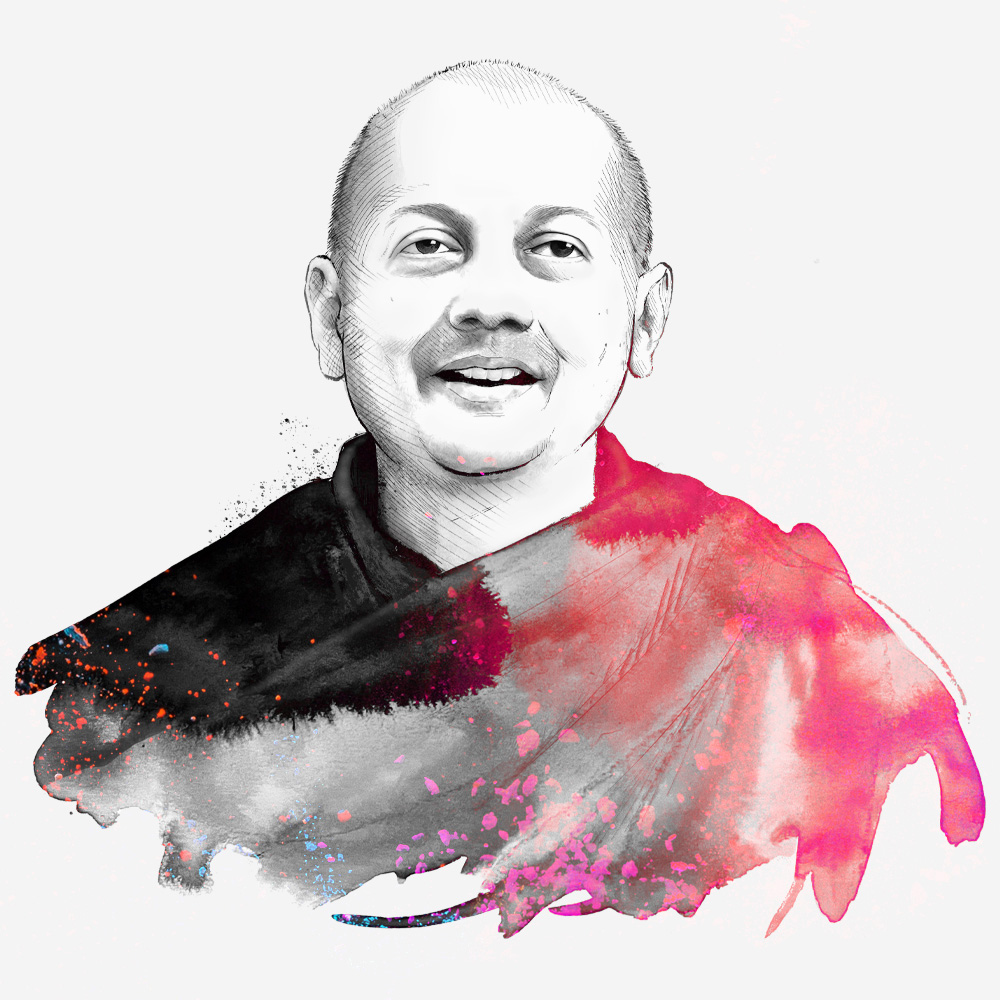


Conceptual Pillars of Advaita Vedanta
Self-Inquiry
The central practice of Advaita is gently questioning the sense of “I.” By turning attention toward what is aware of thoughts, emotions, and perceptions, you examine feelings of subjectivity—whether a separate self can be found amid experience.
Start here:
Who Am I? — Part 1Recognition
Instead of trying to become a better version of yourself, Advaita invites you to see what’s already here—awareness—and notice that it doesn’t need to be perfected.
Start here:
You Are PeaceNon-Separation
Advaita questions the assumption that experience is divided into “me” and “everything else.” When examined closely, thoughts, sensations, and the world around you all appear within the same field of awareness, without a clear boundary between observer and observed.
Start here:
There Is Only LightKey Teachers of Advaita Vedanta
Swami Sarvapriyananda
Start here:
The Ultimate Nature of ThingsRupert Spira
Start here:
The Nature of AwarenessGangaji
Start here:
Being Still